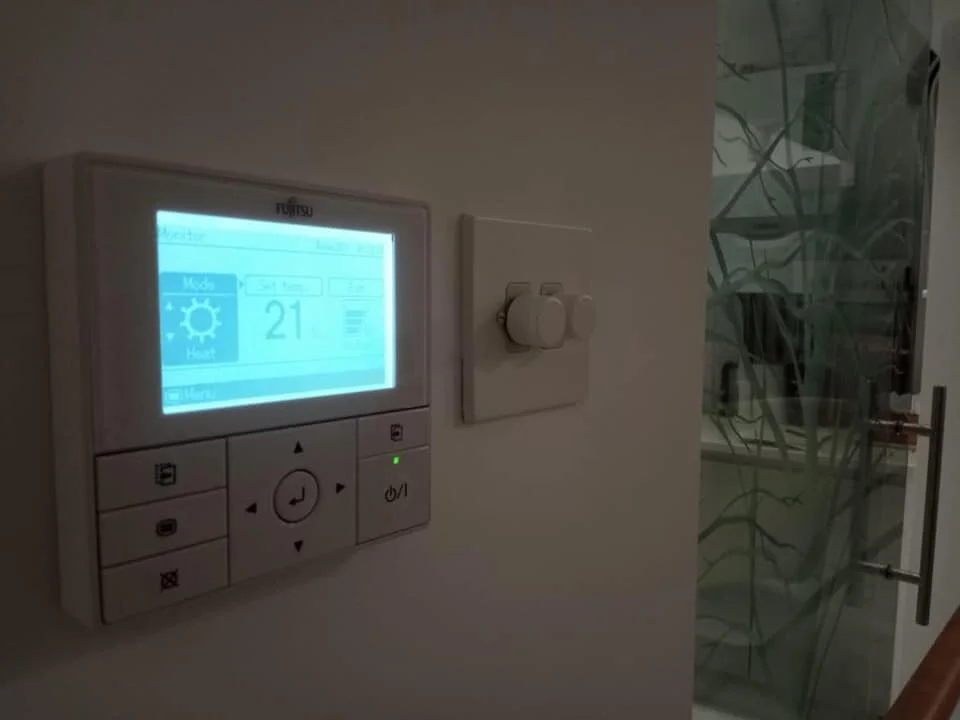
A running fan does not prove that cooling is working. Before booking air conditioning repair, check the mode, controls and unobstructed airflow, then note whether the problem affects one room or the whole system. Persistent poor performance, ice or error messages need investigation rather than an automatic refrigerant top-up.
Air conditioning repair starts with the controls
Confirm that the controller is set to cooling rather than fan-only or heating. Dry mode may not behave like normal cooling. Check the temperature setting, timer, holiday schedule and any central control restrictions. A depleted remote battery can also make the displayed setting misleading.
Allow for the manufacturer's normal start-up behaviour after changing settings. Avoid repeatedly switching modes or cycling the power. Record the displayed code before resetting anything. On a multi split, another room's operating mode may affect what your unit can do, so check the other controllers too.
Look for an airflow restriction
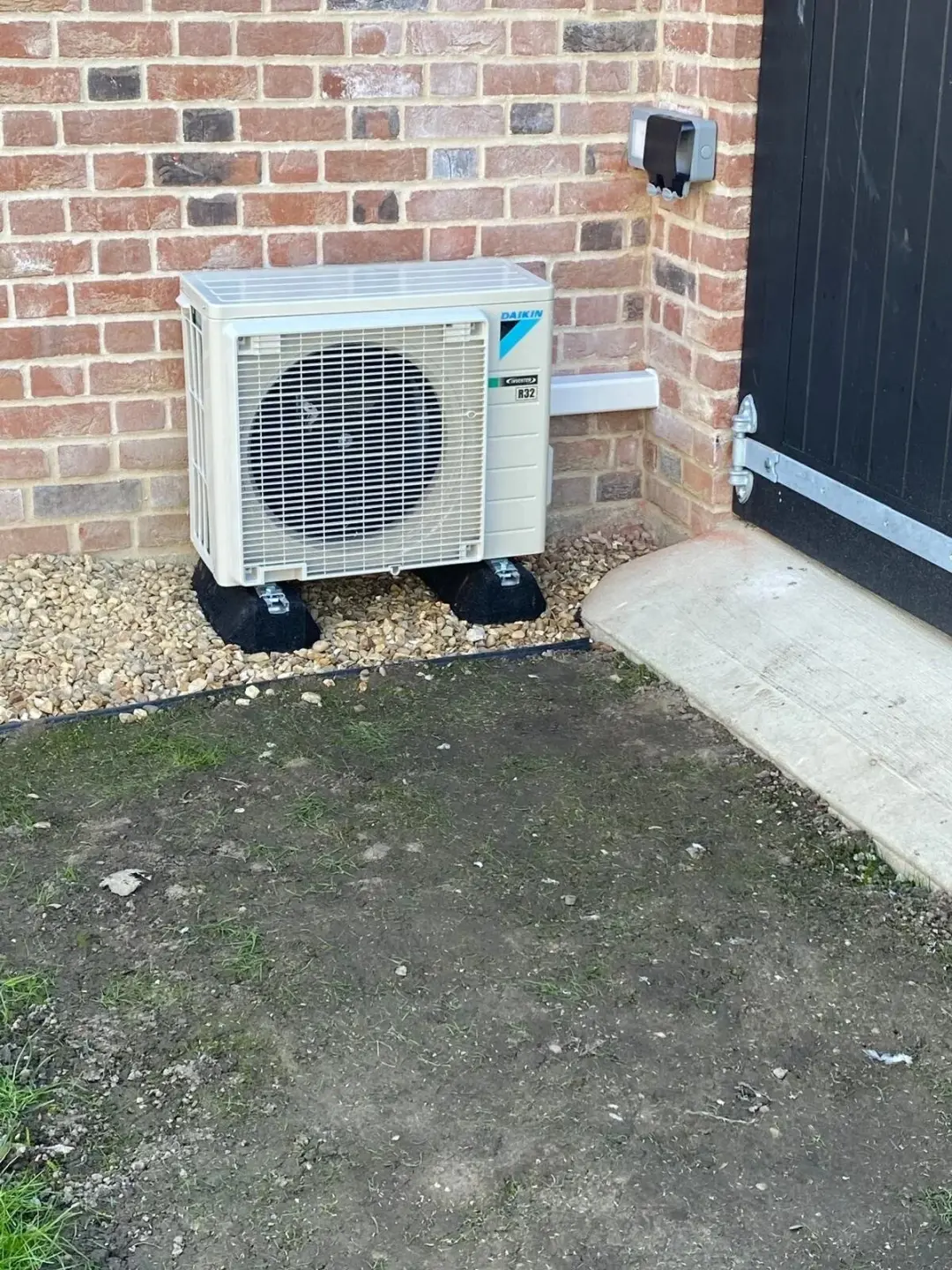
Daikin's troubleshooting checklist recommends checking dirty filters, obstructed indoor and outdoor inlets and outlets, temperature settings and open doors or windows. These are observations an owner can make without opening a refrigerant circuit.
Clean removable filters only as the user manual permits, with the equipment stopped and safely accessible. Do not reach through grilles, spray internal electrical parts or bend coil fins. A dirty coil, fan fault or concealed obstruction needs appropriate servicing. A clean-looking external cover does not establish that the internal air path is clear.
Separate a fault from an exceptional heat load
A room may become harder to cool after new equipment, extra occupants or changes to glazing. Open doors to warmer areas and sustained solar gain can also increase demand. Compare the current problem with previous operation under similar conditions, rather than expecting an instant result in a heat-soaked room.
The Met Office reported 55 UK summer days in 2026 when gridded observations reached above 28°C somewhere in the country, compared with the previous record of 41. That is a national hot-day measure, not a count for your property. It supports checking sustained summer demand, not assuming any struggling system is adequately sized.
Why a top-up is not a diagnosis
Refrigerant circulates in a sealed system; routine consumption is not how it operates. If charge is low, the engineer needs to investigate why and follow the applicable repair and refrigerant-handling requirements. Adding gas without establishing the cause can leave the same fault unresolved.
Other possibilities include sensors, controls, compressor operation and heat-exchanger condition. Symptoms overlap. There is no reliable homeowner test based on touching a pipe or guessing from supply-air temperature alone. Ask for the diagnostic findings and proposed repair before authorising replacement parts or refrigerant work.
Signs to stop the system
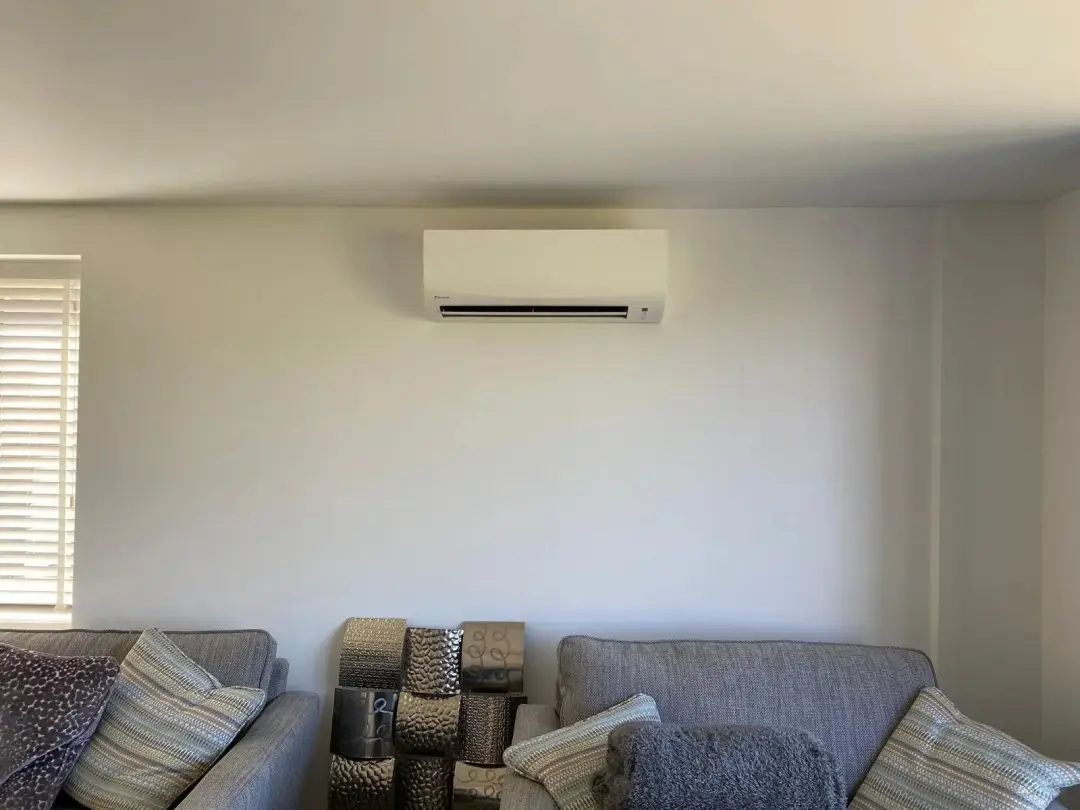
Visible ice, indoor water leakage, burning smells, unusual electrical behaviour or repeated protective trips call for prompt attention. Do not keep resetting a tripping circuit. Keep away from damaged wiring and follow the manufacturer's fault instructions.
Photograph the display, note the model and record which rooms are affected. Explain whether airflow is weak, the air feels unchanged or the system cools briefly before stopping. These distinctions help the service team prepare. If equipment protects a critical business process, use your continuity plan while the fault is investigated.
What to ask after the repair
Ask what failed, how it was confirmed and what checks demonstrated restored operation. The answer may include control settings, airflow, drainage and refrigerant-system measurements as appropriate. Keep the job sheet so a future engineer can see what has already been tested.
For homes and workplaces around Cambridge and Ely, Meadowcroft Air Conditioning & Refrigeration Ltd can investigate poor cooling and explain whether the issue is a repair, a servicing need or a mismatch between equipment and demand. Provide the operating history when arranging the visit.
Sources and figures
Figures and guidance checked on 6 November 2026. Product ratings apply to the stated models; worked cost examples use the assumptions shown.
Summary
Check the controls and safe airflow observations first. If cooling remains poor, arrange diagnosis based on the system's actual symptoms rather than assuming it needs more refrigerant.