An air conditioning company should distinguish cooling from ventilation when assessing an office. Many split units recirculate indoor air without an outdoor-air supply, so a room can feel cool while remaining poorly ventilated. Establish what the installed equipment actually does before assuming temperature control also deals with fresh air.
What an air conditioning company should check
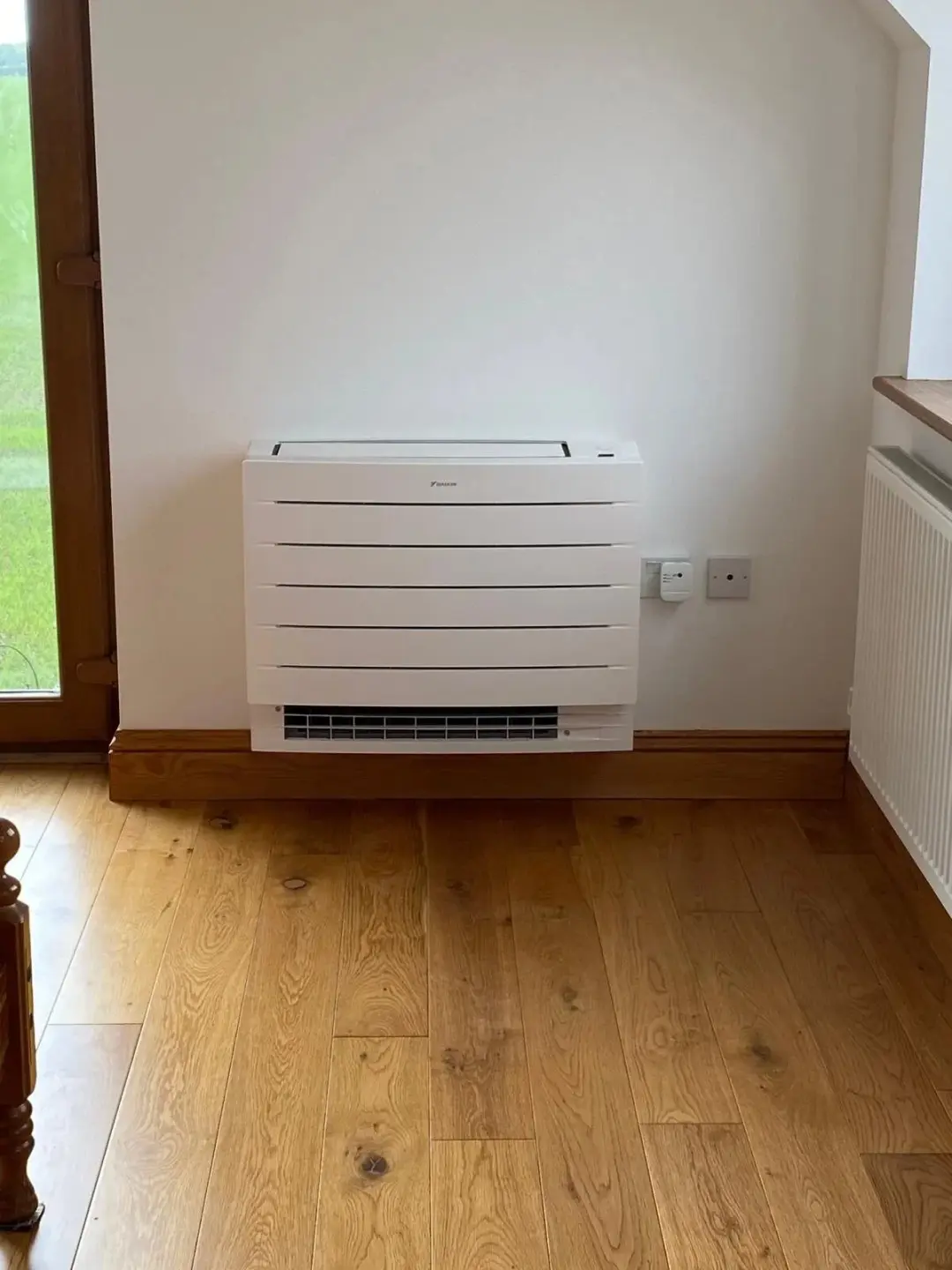
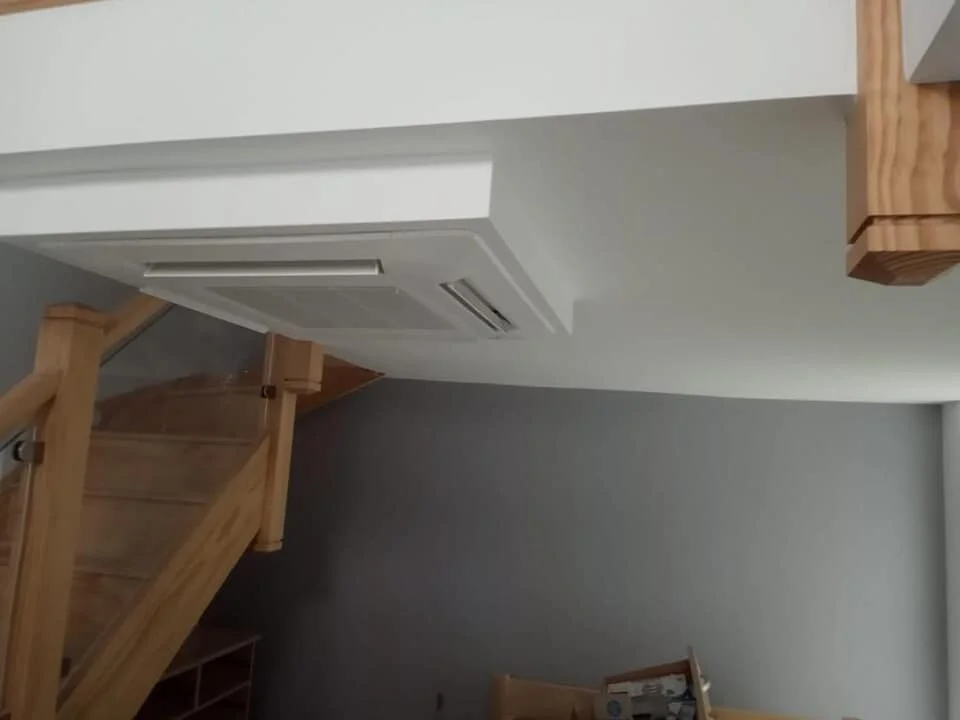
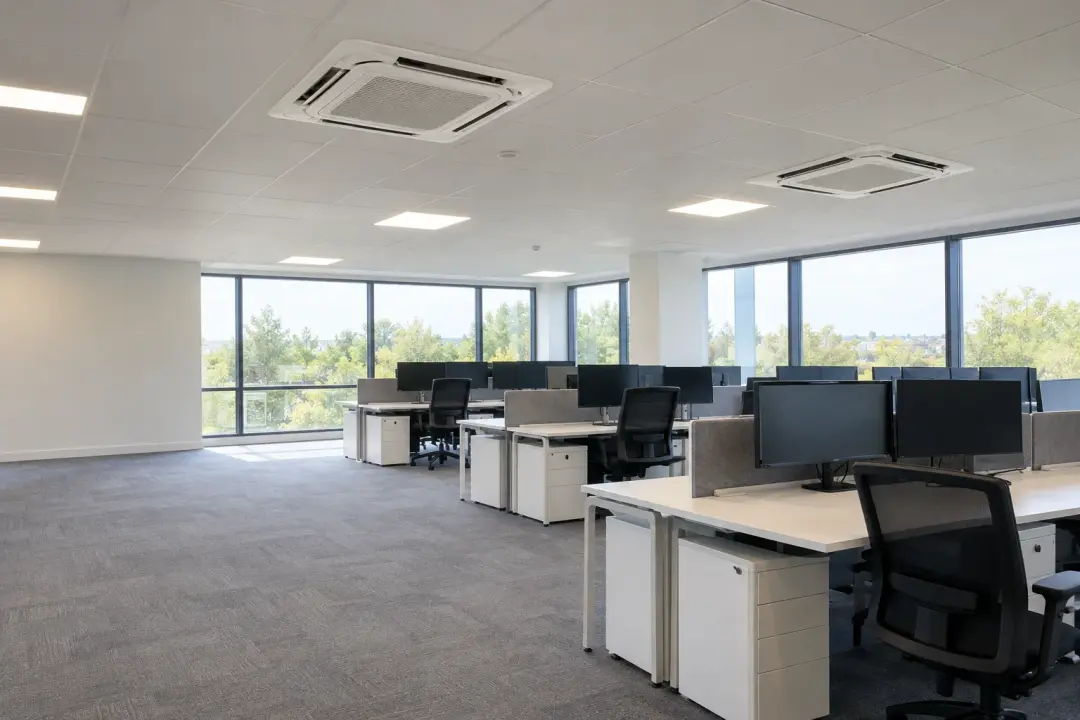
A wall unit or cassette usually draws in room air, conditions it and returns it to the same space. Some commercial installations combine cooling with dedicated ventilation, but a grille or fan alone does not establish how much outdoor air reaches occupants.
Ask for drawings, commissioning records and equipment details. Identify outdoor-air intakes, supply routes and extract points, as well as cooling terminals. A ventilation system that exists on paper may be switched off, blocked or operating to a schedule that no longer matches the building's occupancy.
Use ventilation rates in the right context
HSE's current guidance says fresh-air supply should not normally fall below 5–8 litres per second per occupant. It also notes that many guides recommend 10 litres per second per person for most commercial buildings. These are guidance values, not a complete design for every workplace.
For illustration, 12 occupants at 10 litres per second each require 120 litres per second of outdoor air. Actual design must consider use, contaminants, distribution and applicable building requirements. A cooling capacity in kW cannot be converted directly into a fresh-air rate.
What a CO2 monitor can tell you
In ordinarily occupied rooms, carbon dioxide readings can help identify ventilation patterns. HSE says readings consistently above 1,500 ppm in an occupied room indicate poor ventilation and action should be taken. That is a ventilation indicator, not an all-purpose measure of air quality or an occupational exposure limit.
Record readings alongside occupancy, time and the ventilation operating at the time. Follow HSE placement advice and avoid positioning the monitor immediately beside a person, open window or supply grille. One low reading in an empty room does not establish adequate ventilation during a busy meeting.
Keep temperature and fresh-air controls coordinated
Opening a window may help ventilation in suitable conditions, but it can also add heat load or introduce noise and outdoor pollution. Mechanical ventilation may provide a more controlled supply where natural openings cannot meet the need. The appropriate approach depends on the building and its use.
Ask how ventilation operates during occupied hours, how it interacts with heating and cooling and whether heat recovery is suitable. Energy-saving controls should not silently reduce fresh air below the design requirement. A closed window is not an energy-saving success if the room then lacks adequate ventilation.

Maintain the air path, not just the cooling unit
Filters, fans, dampers and ducts need an appropriate maintenance plan. Furniture or stored materials can block grilles, while a changed floor plan can leave fresh air poorly distributed. Check that building users know which openings must remain clear.
A routine air conditioner service does not necessarily include a separate ventilation system. Specify responsibilities and records for each. Where dust, fumes or process contaminants are present, general ventilation may be insufficient: specialist controls and a relevant risk assessment may be needed.
Prepare for a ventilation and cooling survey
Provide expected occupancy, working hours, room uses and any changes since commissioning. Share complaints about stuffiness or draughts together with temperature and CO2 records where available. Explain constraints such as traffic noise, security or windows that cannot be opened.
For premises in Cambridge, Ely and surrounding areas, Meadowcroft Air Conditioning & Refrigeration Ltd can discuss how cooling and ventilation fit the building. Ask for the proposed outdoor-air arrangement and control strategy to be described clearly, rather than accepting the word HVAC as proof that every function is covered.
Sources and figures
Figures and guidance checked on 6 November 2026. Product ratings apply to the stated models; worked cost examples use the assumptions shown.
Summary
Check outdoor-air provision separately from cooling. Use occupancy records and ventilation measurements to inform a design that keeps fresh air and temperature control working together.