
Air conditioning servicing frequency should reflect the manufacturer's instructions, operating hours and environment. Filter cleaning, professional servicing and statutory inspections are separate tasks. A lightly used bedroom system and equipment running throughout a busy working day should not automatically receive the same maintenance plan.
Air conditioning servicing: setting the interval
Start with the manufacturer's manual and warranty terms. Daikin's published service guidance recommends a professional check at least once a year, even without an obvious defect. Treat that as a manufacturer recommendation, not a universal legal requirement for every small air conditioner.
Daily operation, dusty rooms, grease, intensive occupancy or business-critical use can justify more frequent attention. Tell the contractor how the system is actually used, including winter heating. A calendar date alone gives little information if the equipment's operating hours have doubled since its previous service.
Owner cleaning is different from a service
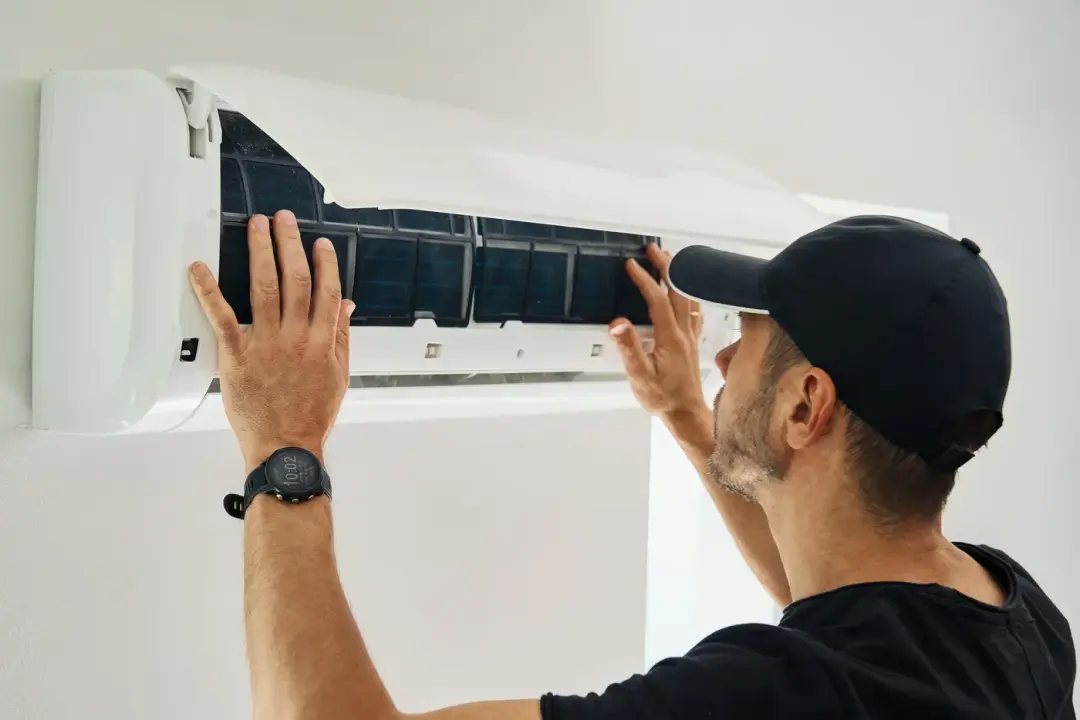
Some removable filters can be cleaned by the owner according to the manual. Other filters need replacement or specialist handling. Stop the equipment before permitted cleaning, use safe access and let washable filters dry as instructed before refitting. Do not assume every filter can be washed.
Professional maintenance can cover coil and fan condition, drainage, controls, mounting, electrical observations and operating performance. Agree the scope in advance. A filter wipe is not evidence that the full system has been inspected, while unnecessary dismantling can also create avoidable risk.
Understand when F-gas leak checks apply
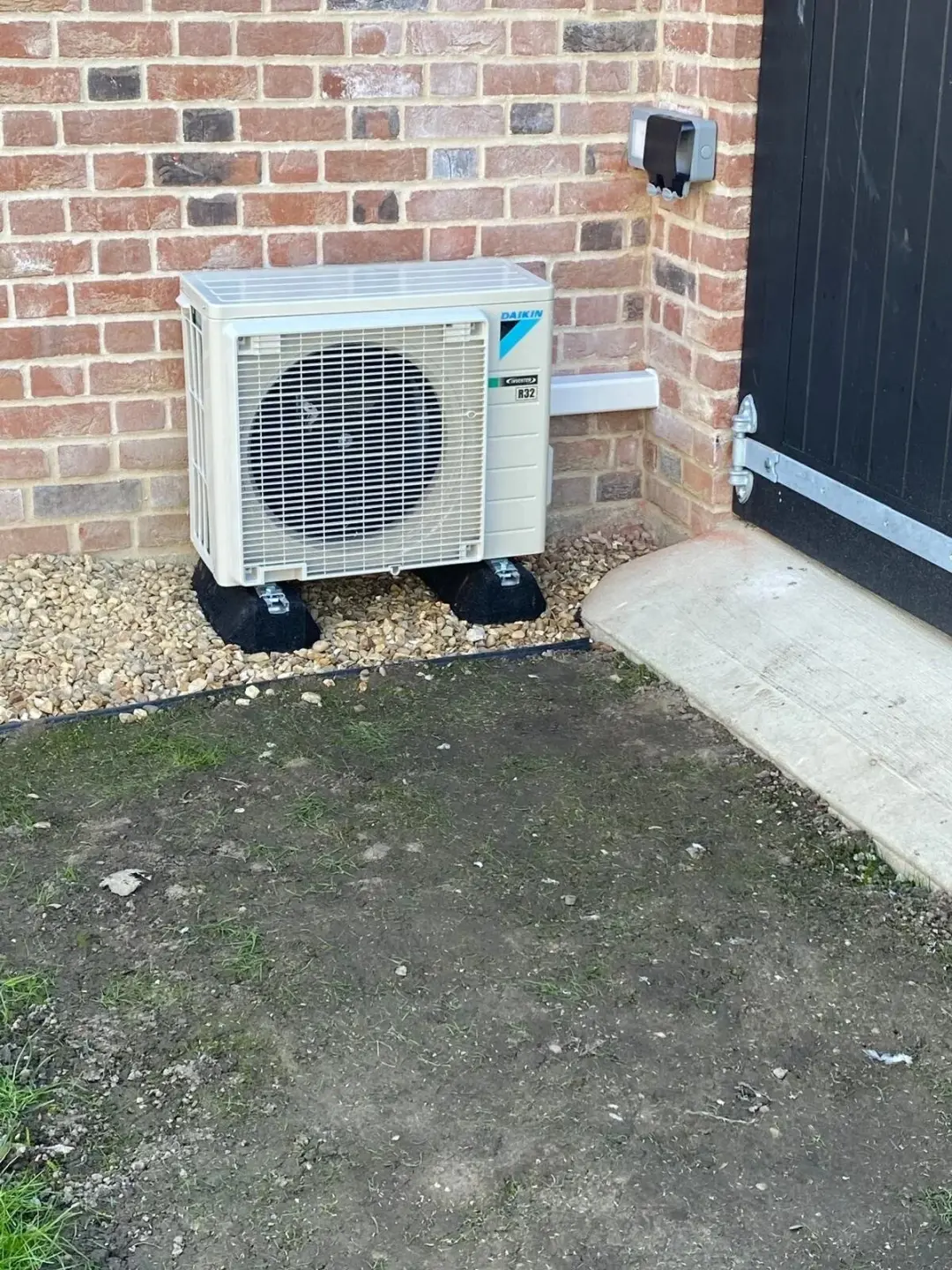
Great Britain's government guidance sets scheduled leak checks according to refrigerant carbon-dioxide equivalent and equipment category. Relevant equipment containing 5 to less than 50 tonnes CO2 equivalent normally needs a check at least every 12 months; 50 to less than 500 tonnes normally requires six-monthly checks. Automatic detection can extend intervals, while relevant systems at 500 tonnes or more must have automatic leak detection. Exemptions also apply.
These are leak-check rules, not a complete servicing schedule. Ask a competent contractor to identify the refrigerant, charge and applicable duties. Do not assume a small unit is exempt solely because of its physical dimensions or cooling capacity.
Know when to bring a visit forward
Reduced airflow, a new smell, water leakage, unusual noise or slower temperature control should be investigated between planned visits. A service booked several months away is not a reason to keep operating equipment with an active fault. Record any error messages before a reset.
Compare electricity use carefully: weather, occupancy and tariffs can explain a higher bill without a fault. Metered consumption over comparable conditions is more useful than price alone. Share the change with the engineer, but avoid treating a single expensive month as proof that a particular component has failed.
Keep records that support the next visit
Retain model details, commissioning documents, service sheets, leak-check records where applicable and the terms of any warranty. Ask the contractor to distinguish completed work from recommendations and to identify anything needing follow-up. A dated invoice without findings can leave the next engineer guessing.
For a business, name the person responsible for arranging visits and responding to recommendations. Include access arrangements and operating schedules. Where an accredited energy inspection is required, track that separately; a maintenance visit does not automatically satisfy an energy-inspection duty.
Build a plan that remains useful
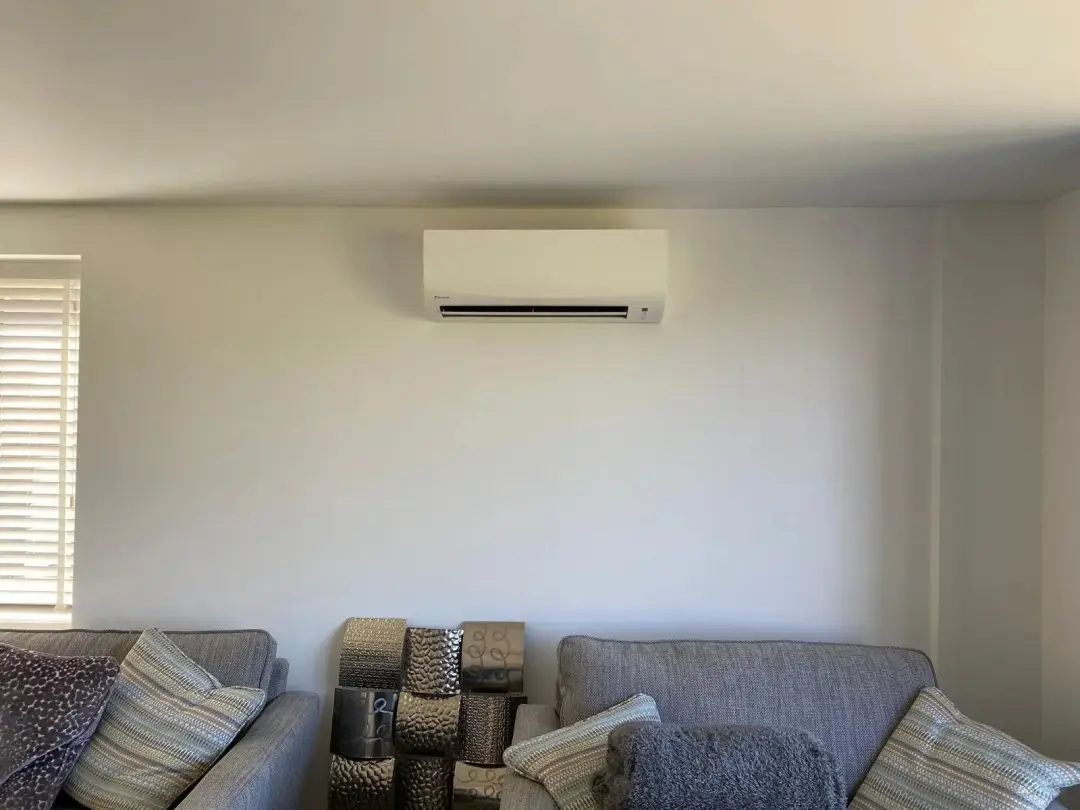
Review the interval after a change in occupancy, building work or operating hours. Dust from refurbishment, altered pipe enclosures or new furniture around indoor units can change maintenance needs. Book at a time that allows any repair work before the most demanding season.
Meadowcroft Air Conditioning & Refrigeration Ltd services systems around Ely, Cambridge and nearby areas. Provide the equipment list and usage pattern when asking for a maintenance proposal, so the recommended scope is specific to your installation rather than a generic checklist.
Sources and figures
Figures and guidance checked on 6 November 2026. Product ratings apply to the stated models; worked cost examples use the assumptions shown.
Summary
Use the manufacturer's requirements and real operating conditions to set servicing frequency. Keep statutory checks separate and arrange prompt attention when symptoms change between visits.