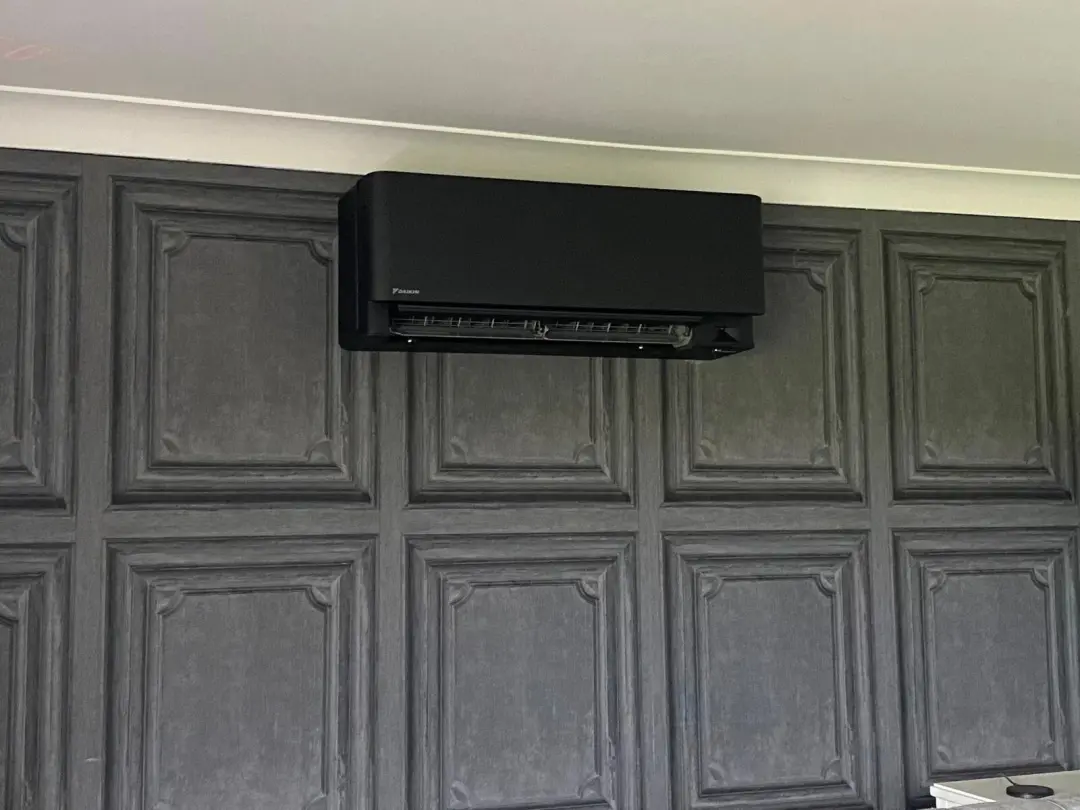
Home air conditioning for a bedroom needs stable temperatures and gentle airflow as well as adequate cooling power. Compare sound figures at the settings you will actually use, think about the position relative to the bed and check whether a condensate pump or outdoor vibration could become the sound you notice at night.
Home air conditioning: bedroom sound ratings
Daikin's current FTXA-DP technical table lists indoor cooling sound pressure as low as 19 dBA for certain smaller models in silent operation, while their high-fan values are 39–41 dBA. Those are model- and setting-specific figures, not a promise that every installed bedroom system stays at 19 dBA.
Sound pressure and sound power are different measurements. Check the exact model, fan speed and test conditions when comparing quotes. The lowest available sound level is most useful when you also know whether that setting can handle the room's required load.
Position the air stream around sleeping positions
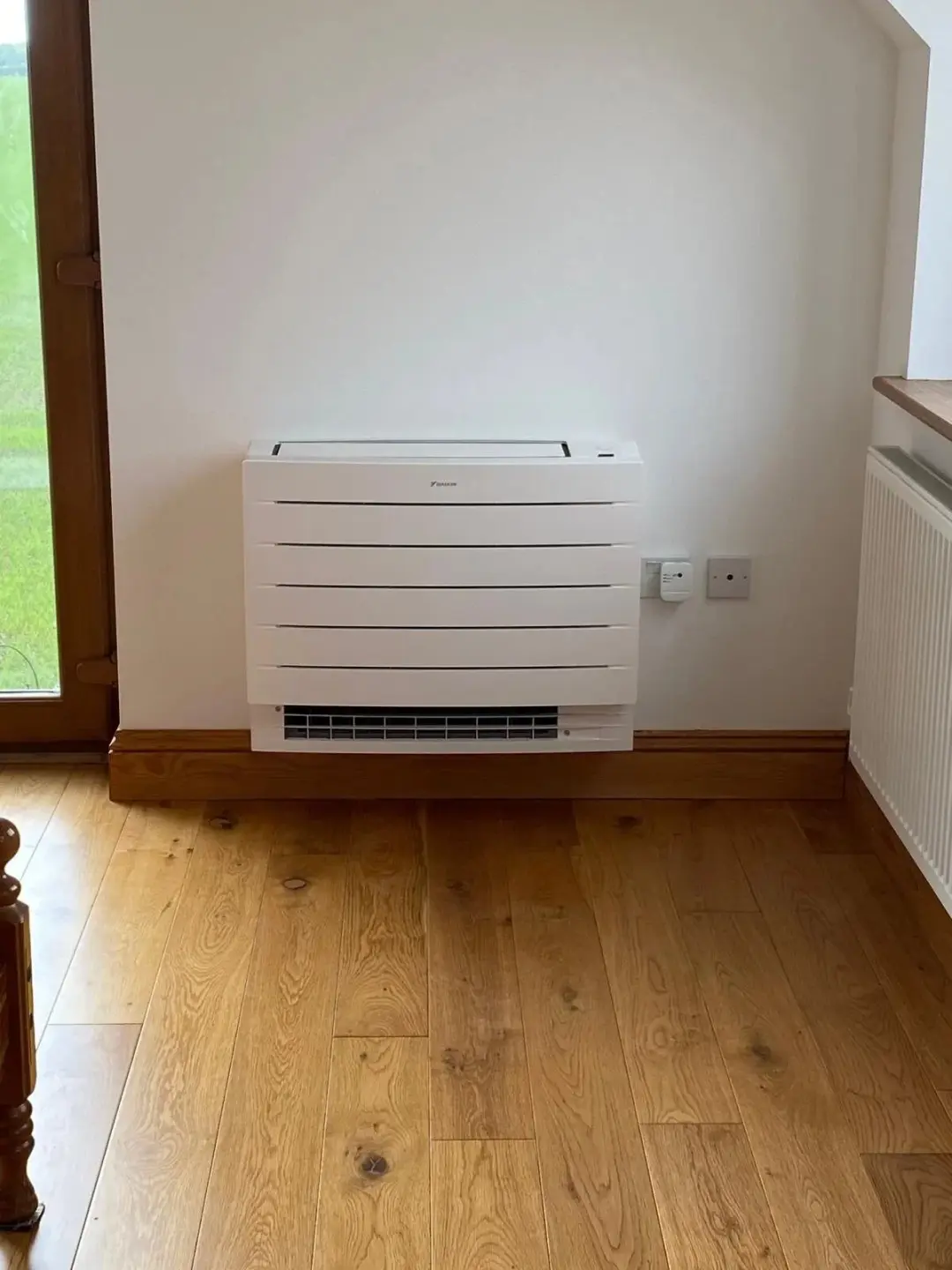
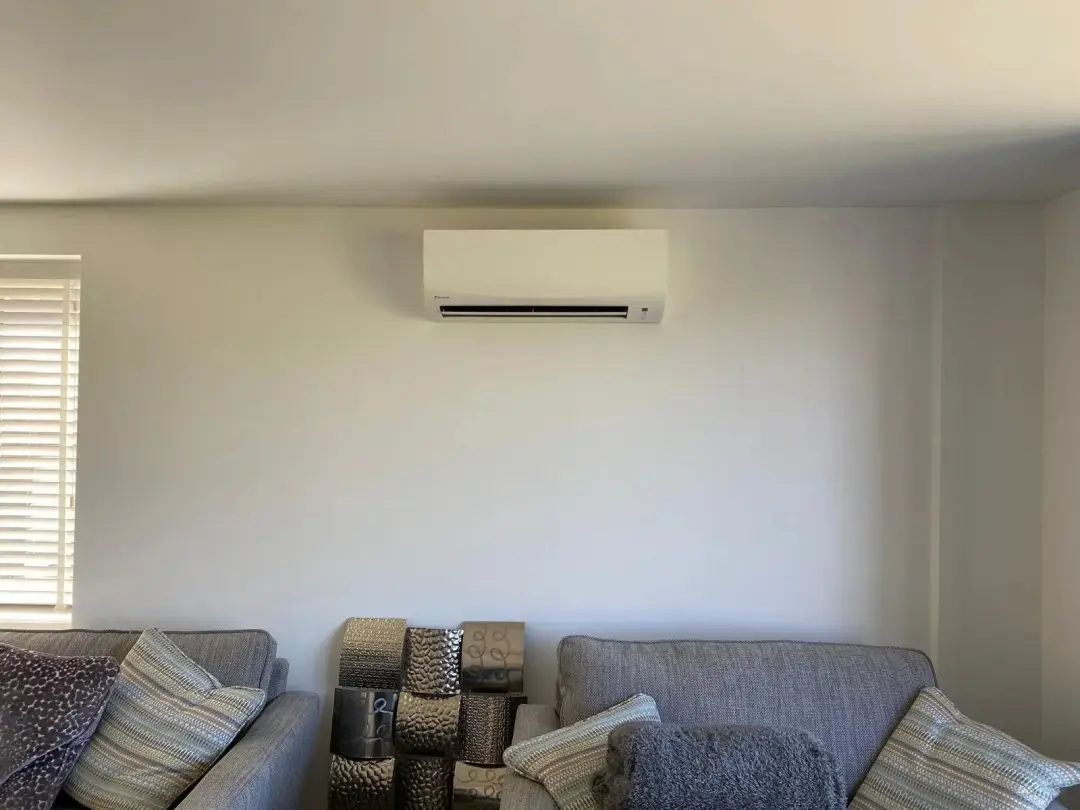
Ask the installer to consider the bed, wardrobes, curtains and usual door position. A unit should circulate air through the room without directing a persistent cold draught at a sleeping person. Adjustable louvres help, but cannot always compensate for an unsuitable location.
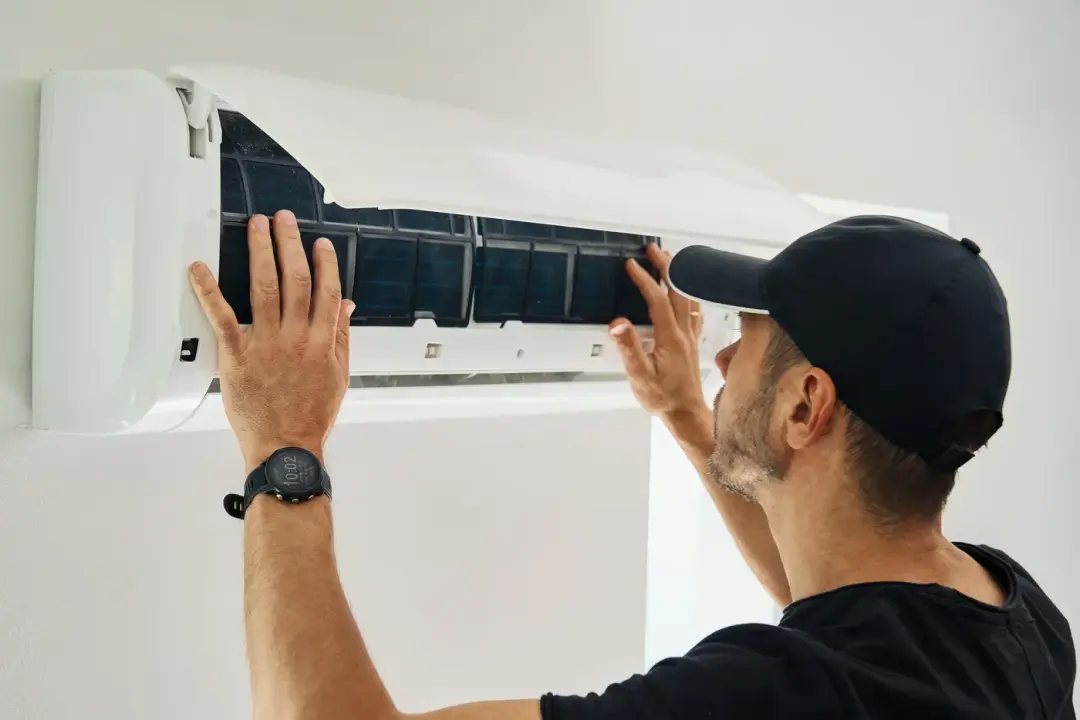
Make the decision with furniture in its intended position. A later wardrobe or curtain pelmet can obstruct the air path. Leave enough access for filter cleaning and maintenance, and check whether the display lights can be dimmed or switched off without disabling normal operation.
Size for steady operation
A unit that is too large for a small bedroom may struggle to run steadily at low demand. A unit that is too small can spend longer at a louder, higher fan setting. Ask about minimum output and the load calculation, not just the maximum nominal capacity.
Explain whether the room is under the roof, exposed to late sun or occupied with the door closed. Cooling a room before bedtime may help reduce the initial load, but it should not be used to disguise a specification that cannot maintain comfort through the intended operating period.
Remember the pump and outdoor unit
Where condensate needs pumping, the pump may start intermittently. Ask whether gravity drainage is possible and what noise and access arrangements apply to a proposed pump. An indoor fan's quiet rating tells you nothing about a separate drainage component.
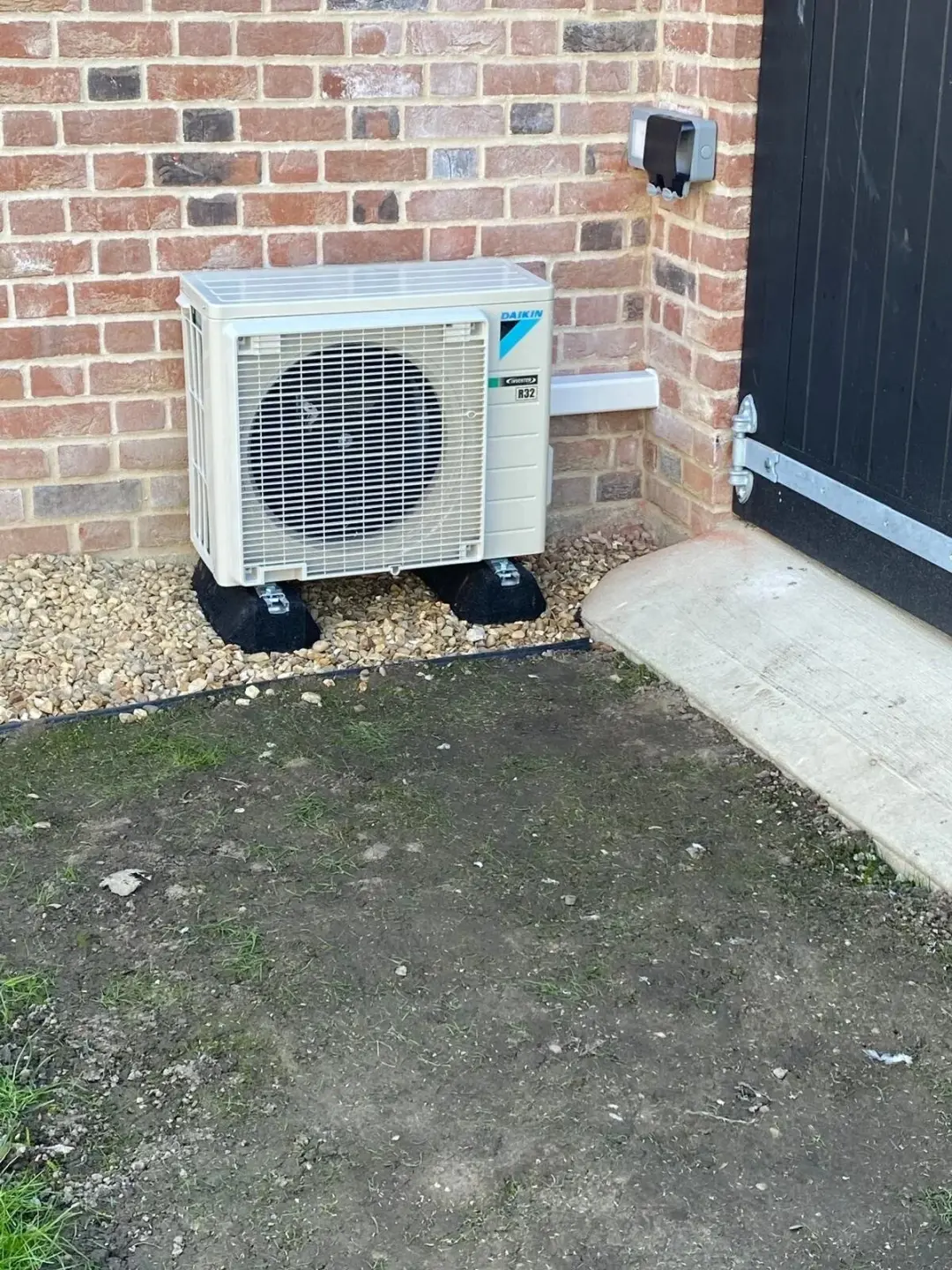
Outdoor equipment can also transmit vibration through brackets or a building structure. Show the installer neighbouring bedroom windows and your own sleeping spaces. Discuss mounting and operating modes together. A quiet-mode restriction should be assessed alongside the capacity available when more than one room needs cooling.
Use controls without overcooling
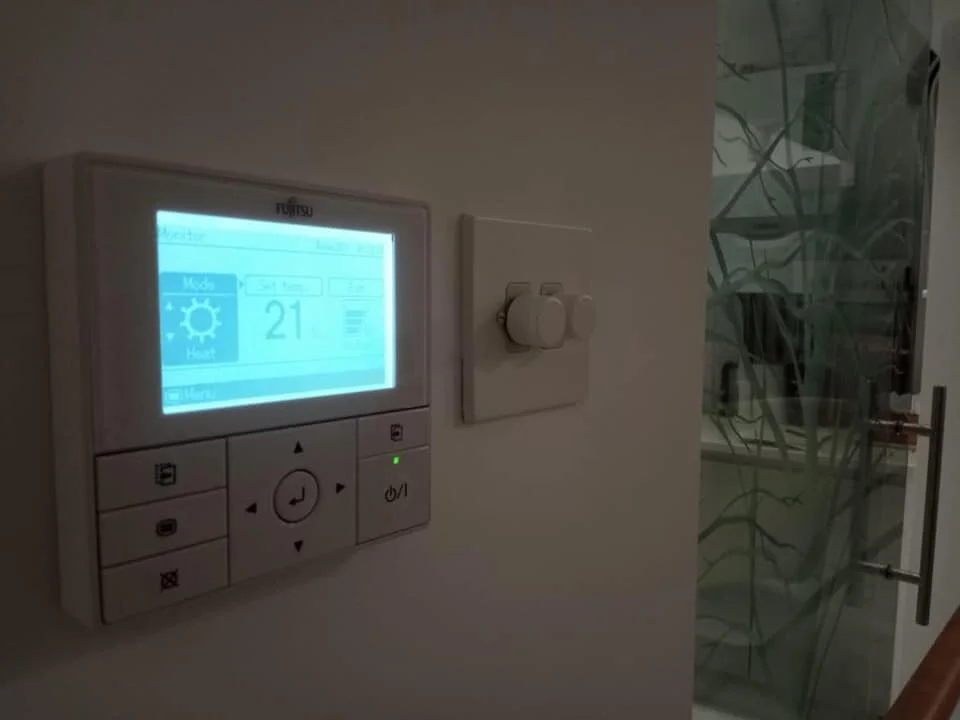
There is no single set temperature that suits every sleeper or every property. Start with a comfortable setting and adjust gradually. The controller usually measures temperature near the unit, so its reading may differ from conditions at the pillow, especially if airflow is obstructed.
A timer or schedule can match operation to bedtime and waking. Check how night mode behaves on the selected model: it may alter the temperature, fan speed or both. Avoid assuming a lower temperature setting cools the room faster; it can simply encourage a longer period of cooling.
Keep ventilation and maintenance in the plan
A typical wall-mounted split recirculates indoor air rather than providing a fresh-air supply. Cooling therefore does not replace the bedroom's ventilation arrangements. Explain how you normally ventilate and ask how to balance that with cooling during hot weather.
Accessible filters and a clear drain route help keep operation predictable. For homes around Ely, Cambridge and nearby villages, Meadowcroft Air Conditioning & Refrigeration Ltd can assess bedroom positions and suitable equipment. Ask for the exact sound data and a clear explanation of the proposed overnight operation.
Sources and figures
Figures and guidance checked on 6 November 2026. Product ratings apply to the stated models; worked cost examples use the assumptions shown.
Summary
Specify bedroom cooling around real fan-speed sound data, airflow direction and drainage noise. A room survey helps identify a system that can maintain comfort without relying only on its quietest brochure setting.