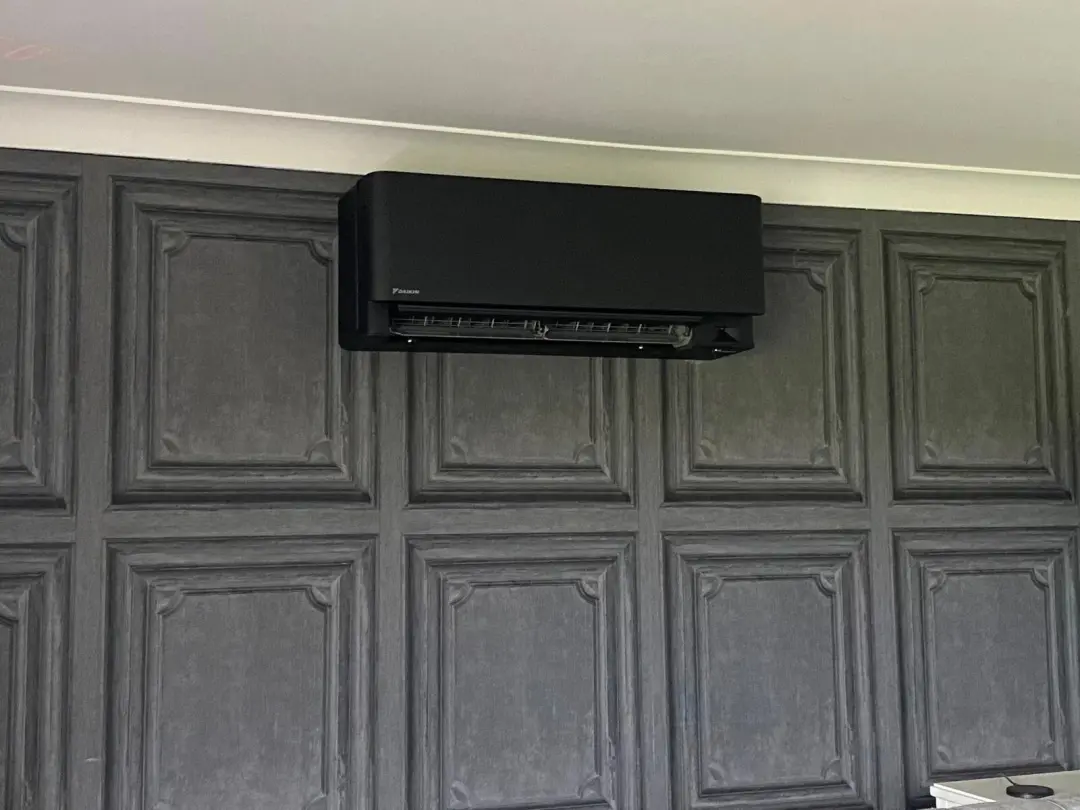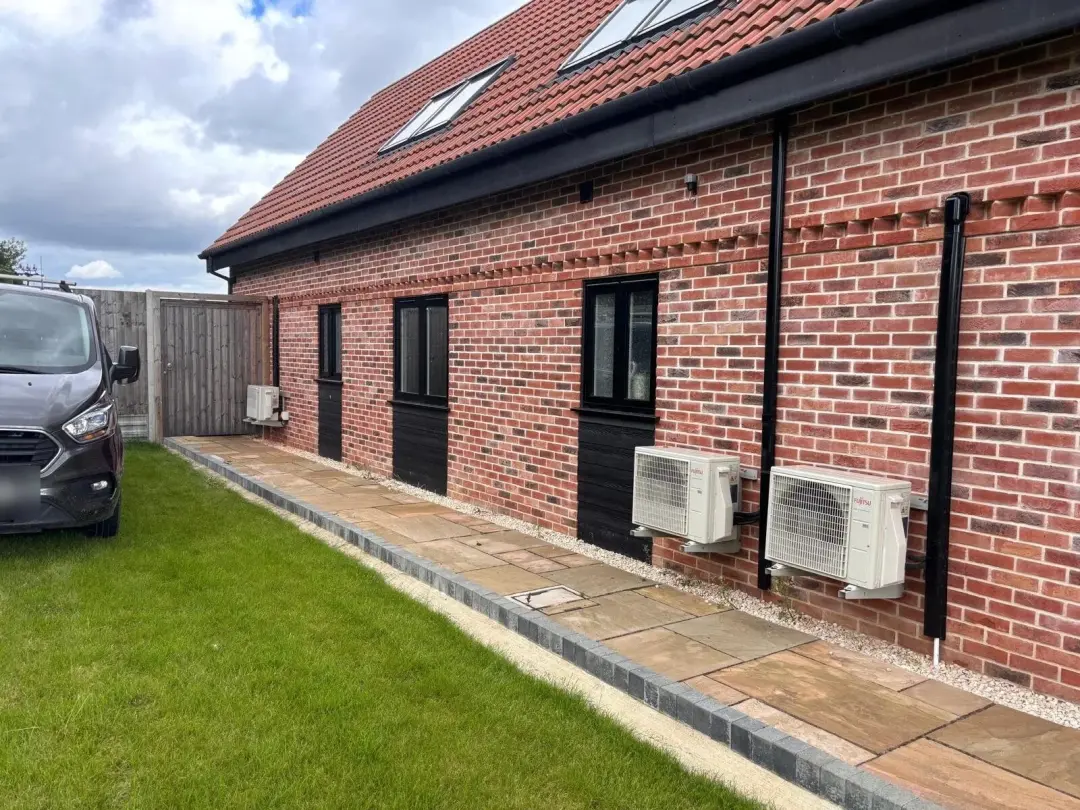
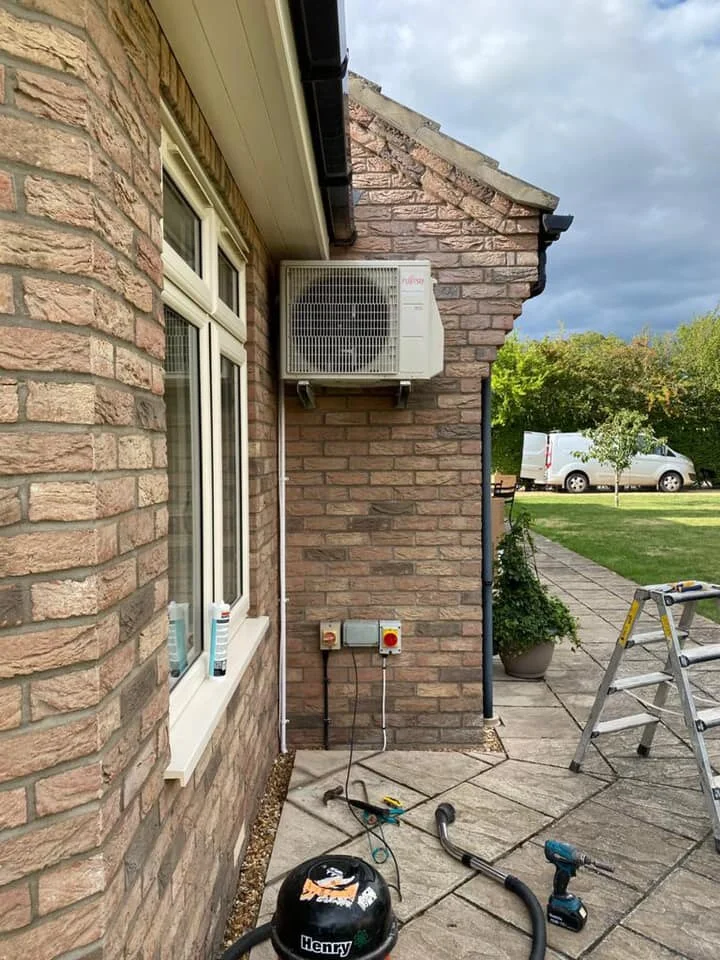
Air conditioning installers need to assess airflow, noise and maintenance access before settling an outdoor unit's position. The least visible corner is not always suitable. Agree the location before fitting day, considering pipework, drainage, permissions and the spaces used by you and your neighbours.
Air conditioning installers: outdoor siting
The unit exchanges heat with outside air. Fencing, stored materials and dense planting can obstruct its intake or discharge. A decorative cover needs to preserve the manufacturer's clearances and airflow; a box that simply hides the machinery can trap discharged air.
There is no clearance that suits every model. Ask to see the installation drawing and check the space with gates open, bins in position and shrubs fully grown. Access to electrical and refrigerant service panels matters just as much as the gap around the fan.
Check current planning requirements
The government clarified in June 2026 that England's permitted development rules were amended in 2025 to allow qualifying air-source heat pumps to cool as well as heat. This does not mean every air conditioning installation is automatically permitted: conditions, siting restrictions and the required noise assessment still apply.
Cooling-only equipment, listed buildings and protected locations deserve particular attention. Leaseholder or freeholder permission is separate from planning. Confirm the position for the actual property and proposed equipment before ordering, rather than assuming a neighbour's installation establishes permission for yours.
Assess noise where it will be heard
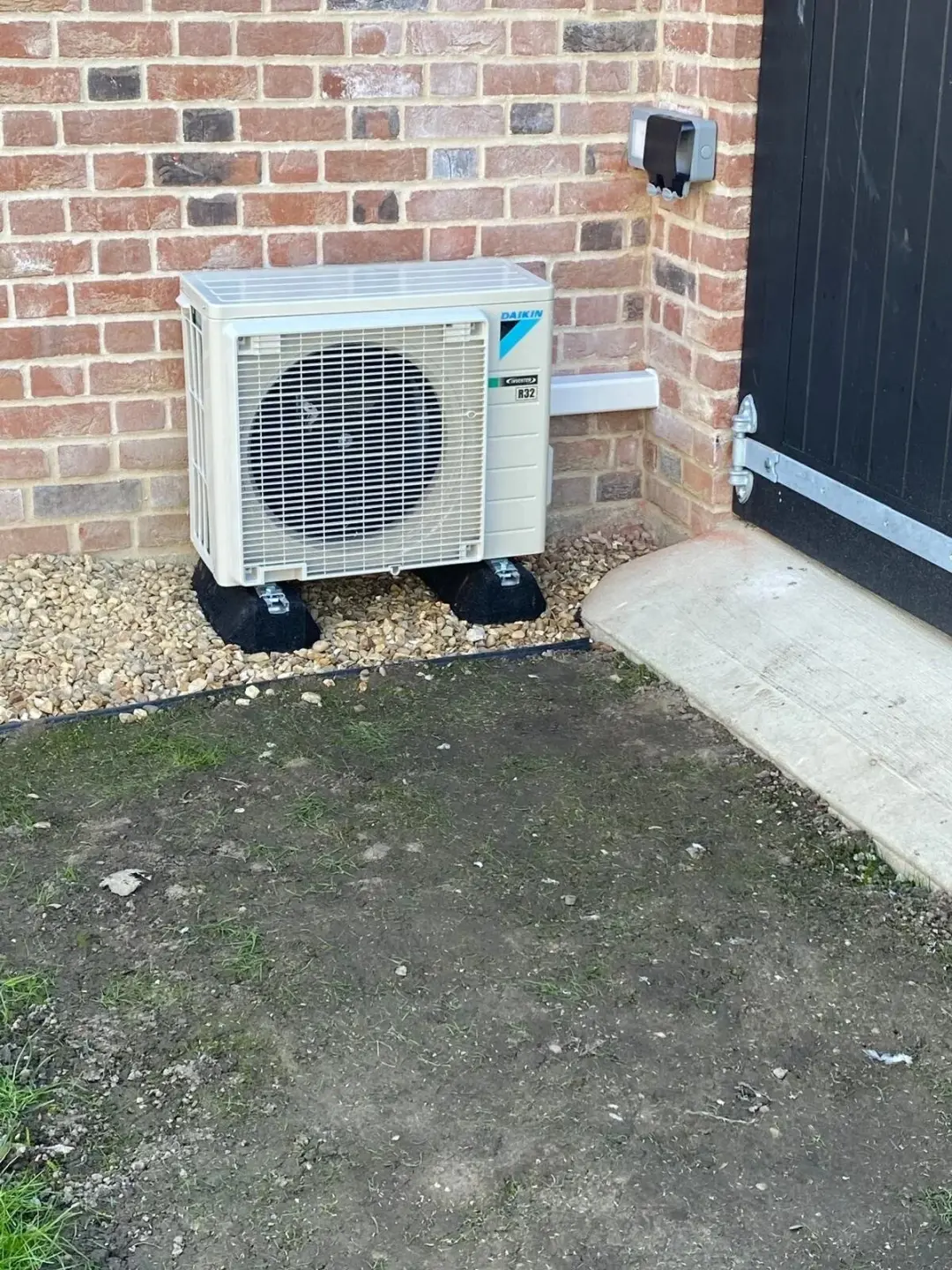
Sound power and sound pressure are different measures. A sound pressure figure also depends on the stated conditions and measurement position. Comparing unrelated brochure numbers can give a false impression of how equipment will sound at a neighbouring bedroom.
Corners and reflective surfaces can affect noise, while mounting can transmit vibration into the building. Explain whether overnight cooling is needed. Ask what output remains in a quiet mode: a reduced sound setting may also reduce available capacity, so it should not be the only figure used for the assessment.
Ground stands or wall brackets?
Ground mounting needs a stable base, suitable drainage and enough room for servicing. Wall brackets require an appropriate supporting structure, correct fixings and vibration control selected for the equipment. Consider what is on the other side of the wall before choosing a location.
A lightweight bedroom wall may be more sensitive to transmitted vibration than substantial external masonry. Mounting high up can preserve ground space but complicate maintenance. Ask how future service access will be provided safely and whether the quotation includes the equipment needed to install at that height.
Plan water drainage in both seasons
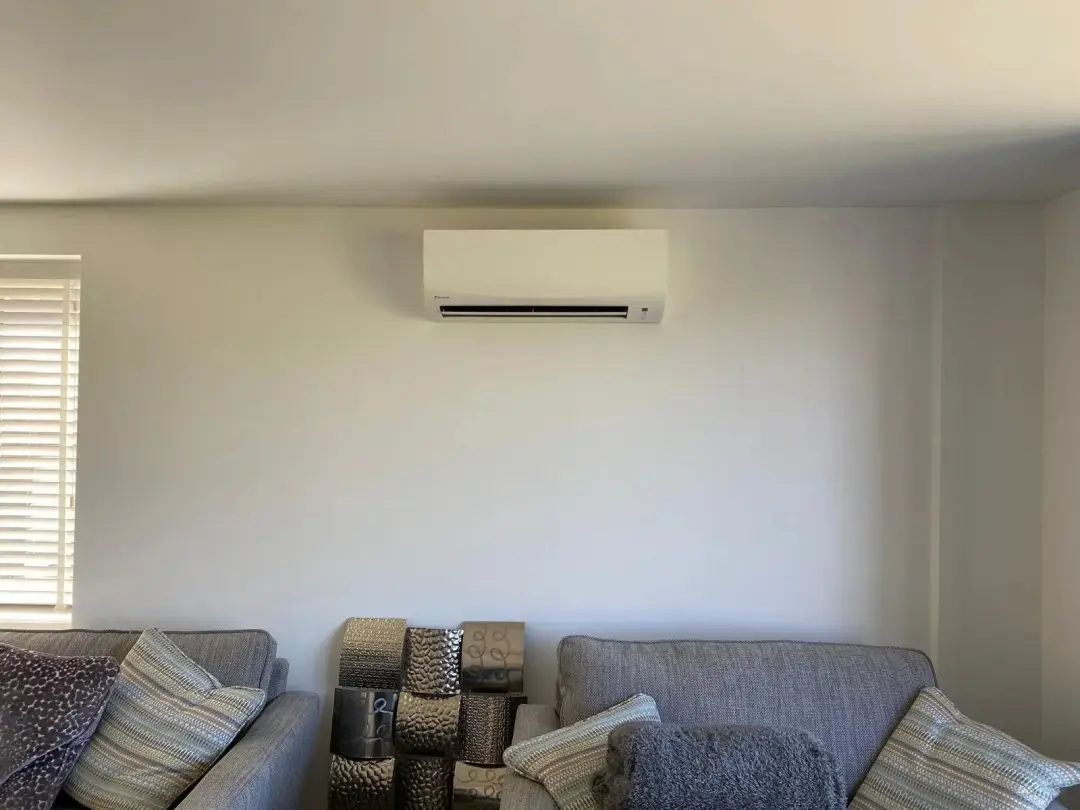
Cooling produces condensate at the indoor unit; heating can produce water outside during defrost. These are separate drainage issues. Neither should discharge where water crosses a path, collects against the building or creates a freezing hazard.
The indoor drain can influence equipment positions. Gravity drainage may be practical in one location while another requires a condensate pump. A pump adds a component that needs maintenance access. Ask where each drain finishes, how exposed pipes are protected and how wall penetrations will be sealed.
Record the agreed location
Take photographs or use a drawing to agree the outdoor position, trunking and drains before work starts. Include neighbouring windows, boundaries and shared access. A late change of position should trigger another check of airflow and noise, not just a convenient move on fitting day.
Meadowcroft Air Conditioning & Refrigeration Ltd can assess installation options in Ely, Haddenham, Cambridge and the surrounding areas. Show us the parts of the property you need to keep clear and the places where quiet operation matters most.
Sources and figures
Figures and guidance checked on 6 November 2026. Product ratings apply to the stated models; worked cost examples use the assumptions shown.
Summary
Agree a position that balances airflow, noise, drainage and maintenance access. Check the applicable permissions before the equipment and pipe routes are finalised.