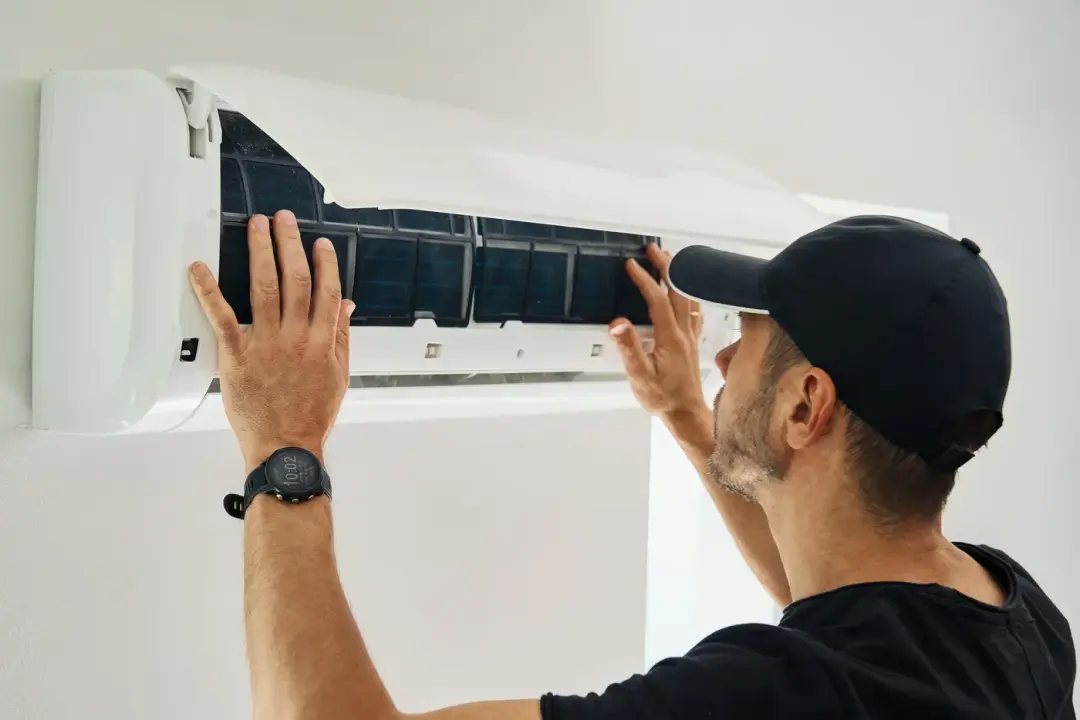
Air conditioning repair is worth arranging promptly when an indoor unit leaks into the room. Condensate may not be leaving correctly, or moisture may be forming outside the intended drain path. Stop operation, protect belongings without touching wet electrics and have the cause investigated rather than repeatedly restarting the system.
Air conditioning repair: finding the water source
During cooling, warm room air passes over a cold coil. Moisture can condense on that coil and collect in a tray before leaving through a drain. Water at the intended outdoor drain outlet can therefore be normal; water running down an interior wall is not.
Humidity, room use and operating time affect how much condensate forms. There is no single normal number of litres per hour for every installation. Note where water first appears and whether it starts immediately or after extended running. These observations help distinguish a drainage problem from surface condensation.
Blocked drains and failed pumps
Dust and deposits can restrict a drain or collect in a tray. A poorly supported or incorrectly routed drain may also fail to carry water away effectively. Where gravity drainage is not possible, the installation may use a pump and a float switch.
Daikin's current K-KDU572KVE drain-up-kit manual specifies annual maintenance and inspection, and says to stop operation immediately if water leaks during cooling. That interval applies to that equipment, not every pump. Have the engineer identify the installed drain arrangement and its maintenance requirements rather than treating all indoor leaks alike.
Ice can turn into a water problem
A frozen coil can release water as it thaws, sometimes overwhelming drainage or sending water beyond the tray. Restricted airflow is one possible contributor, but refrigerant or control faults may also need investigation. Ice is a symptom that deserves diagnosis, not something to chip off.
Do not use a hairdryer, boiling water or tools inside the unit. Record visible ice from a safe position and leave the equipment off pending advice. A temporary improvement after thawing does not establish that the cause has disappeared, particularly if the leak returns during the next long cooling cycle.
Insulation and installation faults
Cold pipework needs appropriate insulation. Gaps, damaged joints or exposed sections can allow moisture to condense outside the intended drain path. Recent decorating, building movement or work near the pipe route can also disturb drainage components.
Tell the engineer if the problem began after installation, servicing or building work. A new system should be checked for its drain fall, connections, tray position and pump operation where fitted. Avoid covering stains or boxing in the route until the source has been found and the area can dry.
Safe observations before the engineer arrives
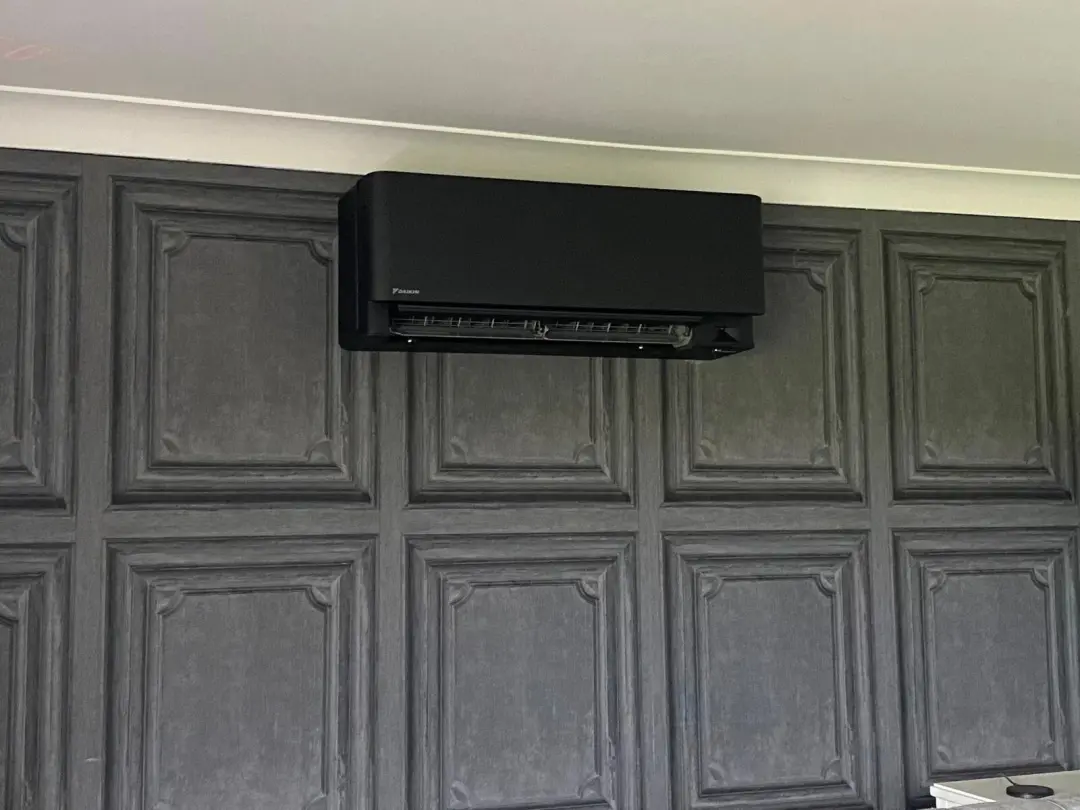
Take photographs showing the unit, the leak and any affected wall. Note the mode, set temperature, duration of operation, unusual sounds and displayed error codes. Identify whether other connected indoor units are affected. Do not remove service covers or attempt to clear a hidden drain with chemicals.
If water is near sockets, switches or the electrical supply, keep clear and seek appropriate electrical assistance. Stop the air conditioner with its normal control if safe. Do not handle a wet isolator. Your first task is to limit exposure to water and electricity, not to prove the system still works.
What a complete repair should establish
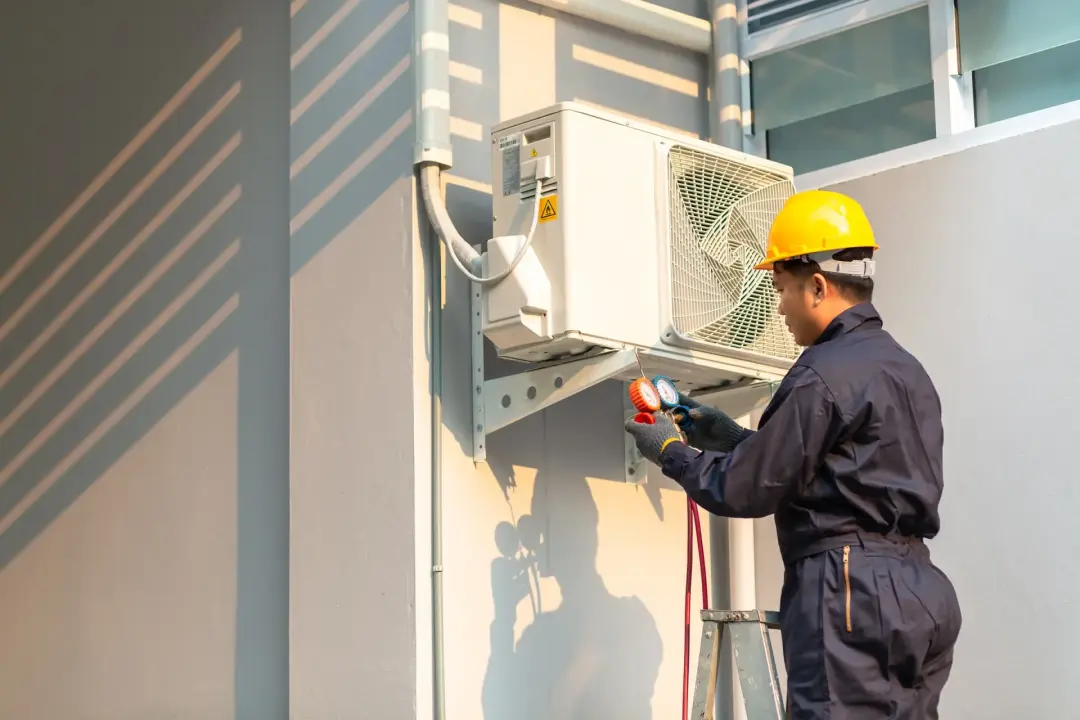
A useful repair identifies why drainage failed and tests the system under relevant operating conditions afterwards. Ask what was cleaned, adjusted or replaced, and whether the pump and any safety cut-out were checked. Keep the findings with the service history.
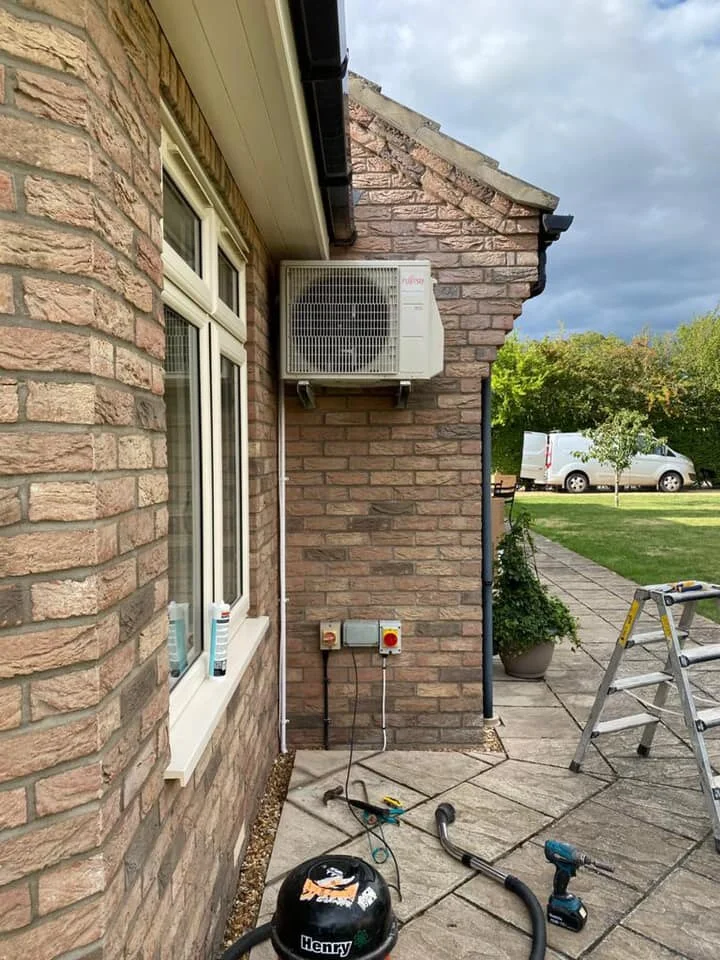
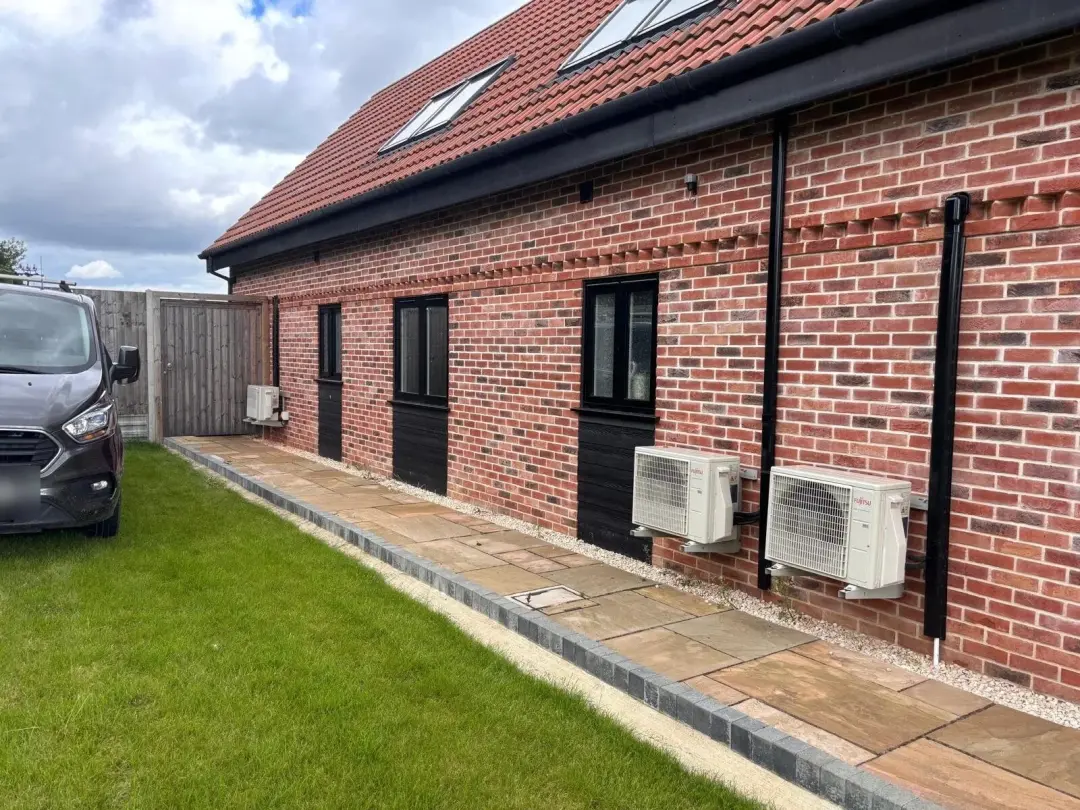
Meadowcroft Air Conditioning & Refrigeration Ltd provides fault diagnosis in Cambridge, Ely and nearby areas. Describe the leak when booking and share photographs where possible. If a hidden pipe route or damaged finish needs separate attention, establish responsibility for that work rather than assuming it is included in the equipment repair.
Sources and figures
Figures and guidance checked on 6 November 2026. Product ratings apply to the stated models; worked cost examples use the assumptions shown.
Summary
Indoor leakage needs a drainage, insulation and operating-condition check. Leave a leaking unit off, avoid wet electrics and arrange a repair that establishes the underlying cause.